Directed by Robert Altman
Released July 21, 1992
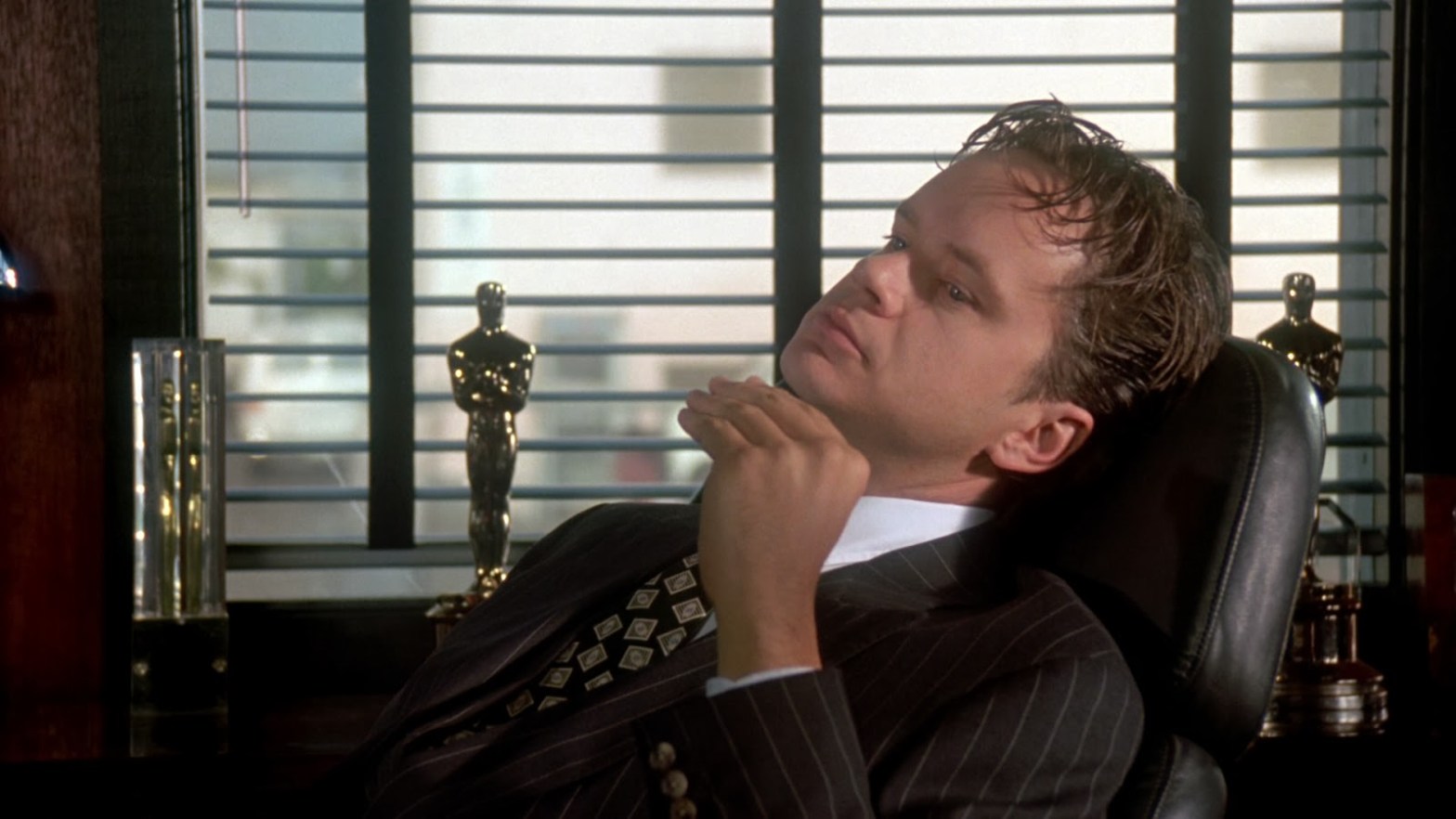
From the very beginning of the film, Altman completely turns around traditional film conventions, executed through rule-breaking and trickery. One of the most significant aspects of this film is Altman’s use of Hollywood to show its own ugliness and the film industry’s greed and corruption of art. Ironically, the film shows us that artistic films such as itself (The Player) are still existent in comparison to typical tropes of Hollywood movies.
The film is a satirical comment on the Hollywood film industry and its stereotypical predictability in film plots and character choices, including the actors playing the roles. The main character, Griffin, directly comments on this idea, saying that
“certain elements that we need to market a film successfully…suspense, laughter, violence. Hope, heart. Nudity, sex. Happy endings…Mainly happy endings.”
The Player itself deliberately includes all of these elements as it directly comments on the Hollywood film industry. Primarily, the film challenges the idea that films can be made with artistic integrity; however, films which follow the rules and guidelines and include the various predictable elements, will generate the most money and, therefore, be more favourable.
The Director of the film, Richard Altman, commented that
“Hollywood is much crueller and uglier and more calculating that you see in the film…it’s all about greed, really…” (Eggert, 2016).
Altman communicates this well through the film’s execution and the unique ability to portray the two different outcomes, or sides, of this idea. For example, one of the final scenes consists of Bonnie facing the facts that the movie the studio created is not artistic, holding little realism; thus, resulting in her being fired and left to fend for herself, abandoned by many that cared about her as she cries on the steps of the studio. On the other hand, the corrupt film executive, whom is guilty of murder, is promoted, has a wife with a child soon to be born as well as a new and fancy house and cleared conscience. This is both a happy and a sad ending for the two characters. Both endings are unexpected by the audience as they aren’t typical endings. The film catches its audience off guard, making a statement about the Hollywood film industry.
During the first scenes of the film, it is able to be deciphered that they are in Hollywood as it is created through the various aspects that can be associated with it. For example, much of the first parts of the film consist of: story pitches, famous actors, meetings, agents, bookings, movie posters, fancy cars, life of luxury, parties, fancy clothes and the fact that everybody knows everybody. An audience can recognise these aspects; however, are caught by surprise due to the nature of which the film portrays Hollywood.
“Altman wants the audience to be caught off guard by how much worse it is” (Eggert, 2016).
Despite this goal that Aspen has which involves communicating the lack of hope and faith attributed to Hollywood, he does not become bitter, instead, applying comedy and typical film elements to challenge, identify and laugh at. The most prime example of this is when Bruce Willis heroically charges into the gas chamber to save an innocent Julia Roberts on death row – succeeding and kissing as they walk to safety.
References
Eggert, B. (2016). The Player. Retrieved from https://deepfocusreview.com/definitives/the-player/
 The Film's Effect