Knowing all you can about a character is crucial to the success of an actor’s performance. To this extent, analysing a character often requires a significant level of research – not simply the name, location, age, appearance, mannerisms and voice of the character. This is not enough.
An actor needs to have a sense of meaning and connection to every thought in every sentence spoken by the character. They need to be able to identify and understand all changes in the dialogue, acknowledge and be familiar with the overall objective and current objective (which is always changing), recognise and experience the character’s flaws, connect with their memories and moments of the past, be aware of all relationships and what they mean to the character, know the inner monologue (the process of thought which isn’t spoken), understand the character’s ghost (a moment in the past which has affected the character and their decisions) and spot all conflicts and everything that prevents the character from achieving their objectives. In addition to this work expected from an actor, their performance needs to feel natural and authentic as if it is the first time the character is speaking the dialogue.
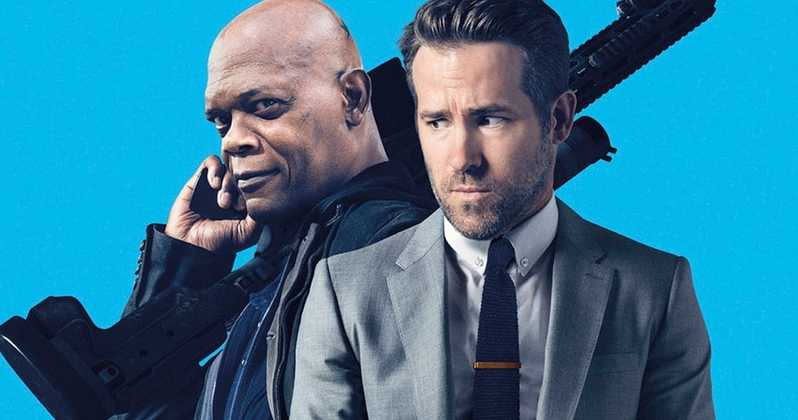
Hitman’s Bodyguard, a film directed by Patrick Hughes and released in 2017, follows the story of Michael Bryce, a bodyguard, assigned to the protection and safe transportation of Darius Kincaid, a hitman. They are constantly under attack by a ruthless dictator’s men as Kincaid is attempting to testify against the dictator in court – Kincaid being the only (living) person with sufficient evidence to persecute him. Bryce, whom used to be a triple A rated executive protection agent and CIA officer, has been reduced to protecting drug-addicted corporate executives due to the assassination of one of his clients two years ago. Bryce and Kincaid struggle to get along throughout the ordeal; however, Kincaid eventually learns of and discloses the fact that he had shot Bryce’s client on the way to his next job.
In a comically entertaining scene, Ryan Reynolds (Bryce) performs a monologue to a street bartender after leaving Kincaid (played by Samuel L. Jackson) in a precarious and vulnerable situation. However, Reynolds does not simply speak the lines because he is naturally talented. He, as all actors do, has to have a thorough understanding of the character.
To perform this monologue, I am going to analyse the most important information for character analysis in the following paragraphs.
Firstly, we will discuss the ghost of Michael Bryce – the event in his past which influences all he does even two years later, especially since it is included as a significant part of the film’s plot. Essentially, Kincaid is a hitman who was passing by Bryce’s client and decided to take a shot which instantly killed him. Bryce believed the incident to be a result of his girlfriend spilling information, subsequently, she suffered all the blame and they broke up. In addition, Bryce lost his job and his reputation as a triple A rated executive protection agent. Just before his monologue, he has been made aware that the person he must protect is actually the person who ruined his life as well as the fact that it wasn’t a planned assassination, just passing by. In addition, his now ex-girlfriend is not to blame for the incident. All of this contributes to how the actor will play the scene as well as how they can connect to the piece. Realistically, he lost it all and now he feels a desire to get revenge. He is obviously angry and upset but he would also experience guilt for his girlfriend and shame for so easily failing.
Another important aspect of character analysis to focus on is the flaw which is a determining factor of the progression made by the character. The flaw is what prevents the character from achieving their objective. In this case, Bryce’s objective would be to achieve some level of revenge on Kincaid, to abandon him and leave him to be killed by those that are after him. His overall objective (his ultimate goal throughout the film) is to regain his reputation, get back his old job and to have a happy relationship with his ex-girlfriend. The only way to be able to achieve all three of these objectives is to complete his assignment and safely transport Kincaid to the court house. Therefore, his flaw is that he needs to keep Kincaid alive and safe and deliver him to the court house – Bryce must protect and be responsible for him. The objective he had beginning the monologue is transformed as a result of the character flaw.
When analysing any dialogue, an actor should be able to identify each and every action verb that is played. There should be at least one action per sentence as this creates an understanding of what the intention of the line is and how it should be performed. Action verbs reflect the character’s objective and decision making process. It also prevents the performance from remaining on a single note due to the fact that the action is always changing.
The following is Bryce’s monologue with an action verb next to each line:
Do you have any idea how prepared I was? (seeking, wallowing, defending)
No. Every possible scenario I had covered. Every kill shot. Every…every angle. (justifying, reassuring, proving)
And this guy ruins my fucking life with one luck shot through a window the size of a…just a… (attacking)
There he goes again. (accusing)
I hope they kill him. I really do. (avenging)
Even if I did save him…again…you know what he would say? (debating, questioning)
He’d say I had it all figured out before you got here. (justifying, debating)
He’d say uh…”I guess my think just better than your thing motherfucker. I guess bullets are just allergic to me motherfucker.” (mocking, defending)
This guy single handily ruined the word motherfucker. (accusing, attacking)
Do you know how hard that is to do? (questioning, demanding)
I was triple A rated. Executive protection. Triple. (declaring, justifying, reminiscing, proving)
I was up here…I was up here and… (regretting, reinforcing)
GODDAMMIT! (submitting, succumbing, recognising)
Character analysis is evidently hard work and there is still so much more to consider when deconstructing dialogue. However, what is mentioned in this blog is some of the most important aspects of any character analysis and is sure to improve any performance.
 The Film's Effect