Directed by Tom DiCillo
Released July 21, 1995
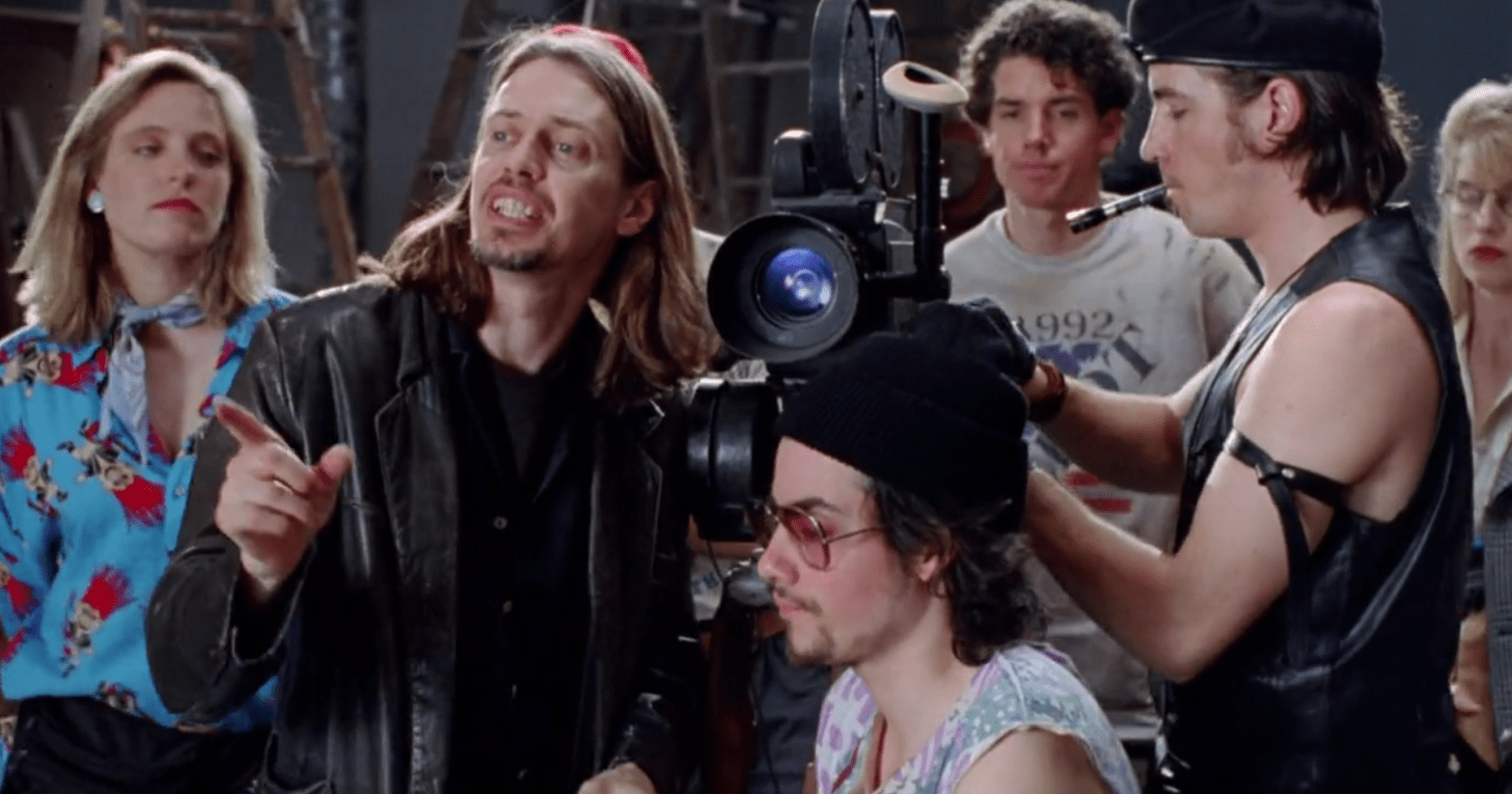
Living in Oblivion offers a unique insight into being on set during the production of a film. Although it may seem all too real for those with experience, the broader audience are subjected to a comedic behind-the-scenes telling of a film crew’s challenges, particularly focusing on the suffering of both the actor and director.
A unique stylistic approach is presented to the audience immediately from the opening scene – black and white picture. It is a refreshing approach to film, particularly in modern cinema, however this choice isn’t fully appreciated until the first satisfying transition into colour on cue with the “action” call from the director of the film within the film. When the camera is rolling and the actors begin the scene, the audience is completely absorbed into a new world with different characters and a different setting which is the ideal goal for any film. This stylistic choice not only reflects and emphasises the heavily prevalent ‘low-budget’ factor of the film but it also creates in the audience the same desire shared by the cast and crew which is to continue and finish the filming of the scene. It is a natural response to want to see the world truthfully and in colour which is why an audience feels a need to continue watching the emotional scene being filmed between the two actors. However, the audience, like the two actors on set, are repeatedly removed from the world of colour as a result of an unpredictable disruption, mistake or issue occurring on either side of the camera and the agitation is shared by all.
The movie is split into three parts: the first part being a dream of the director, the second part being a dream of the lead actress and the third being the real filming of a scene on set. Each part endures the same arduous filming process accompanied with infinite distractions and issues that prevent any progress from being made. This pattern is only ever broken in the final few scenes of the film when a scene is successfully captured without disruption just as the director was nearing breaking point. Through his perseverance to continue despite such challenging situations, the Director, Nick Reve, finally makes progress thanks to the comedically timed arrival of his elderly mother showing up on set and taking on an acting role in the dream sequence. This is certainly attributed to Nick’s earlier comment in the film:
“Sometimes you just have to roll with things”
A prominent feature throughout the film is that all of the occurring issues are a direct result of the film being a low-budget. The film (and the film within the film) highlights the struggles that new/emerging or low-budget film crews must endure. This opposes the traditional high-budget Hollywood films which have access to higher quality sets, equipment and crew. Various references are made to Hollywood filming throughout Living in Oblivion and how there is such a large contrast between the opposing sides of filming. Once an additional character, Chad Palomino, is introduced as a Hollywood actor into the film, he is portrayed as a self-absorbed and unskilled actor (not the actor playing Chad) whom repeatedly prevents any progress on set by constantly stopping the shoot through mistakes or to provide his personal thoughts and suggestions. The challenging nature of dealing with the Hollywood actor irritates the audience as much as irritates the Director. DiCillo, the Living in Oblivion Director, has even mentioned that he had “lifted all of the Palomino character’s mannerisms from a star with whom he had just finished working” (IMDb, 2019). It’s intriguing to see this contrast between the two types of cinema, Hollywood filming and low-budget filming, particularly in a cinematic movie. For an audience, it creates both perspective and appreciation for the two sides of the industry.
Overall Review
Although the plot would, at first, seem repetitive, Living in Oblivion captures the attention of its audience throughout the entirety of the film through it’s perfectly timed comedy and its uniqueness in plot and style. As a result of the beautifully captured scenes and the ability to feel as part of the crew, it is easy for us to be absorbed into the world of the film, coloured or not.
 The Film's Effect